Mostrando entradas con la etiqueta levels of iconicity. Mostrar todas las entradas

viernes, 2 de noviembre de 2018

Final activity Levels of iconicity


This is the last activity to do after studying the levels of iconicity.
DESCARGAR

Degrees of Iconicity FINAL ... by on Scribd

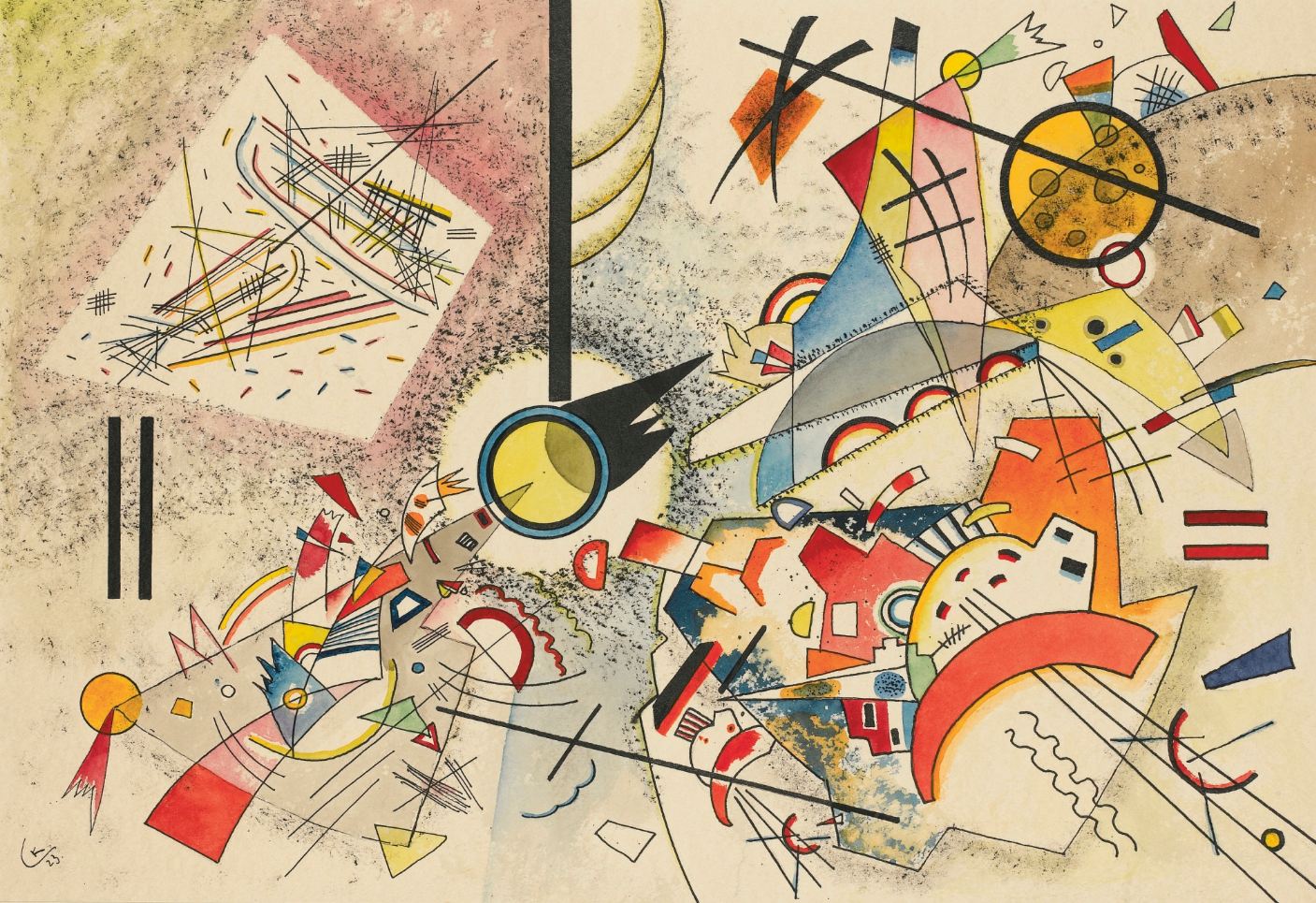
Kandinsky, the artist who invented Abstraction

  Kandinsky created the Abstract Art at around 1910, due to the expansion of photography and because he had something really especial called SYNESTHESIA. There was another painter that is considered the co-founder of Abstraction, Hilma af Klint.                   

Watch this presentation about Kandinsky: 


Read again carefully the information: 

 Wassily Kandinsky was born in December 1866, in Russia. As a child he loved music and learned to play the piano and the cello. When he left school he became a teacher. 
When he was 30 he went to Germany to learn how to draw and paint. Later, he settled in Germany after World War I and became an art teacher. Twenty years later, in 1933, he went back to France where he stayed for the rest of his life. Kandinsky’s artwork is called abstract. His paintings are made up of lots of shapes. Kandinsky used music to help him work. This helped him to work out which colours and shapes to use. Kandinsky wanted to make people feel an emotion when they looked at his paintings. Emotion means a feeling like being happy or sad. Kandinsky died in December 1944. He was 78 years old.


QUESTIONS 

1. When was Kandinsky born? 

2. Which instruments did he play? 

3. What did he do when he left school? 

4. How old was he when he went to Germany

5. Where did he go in 1933? 

6. What is Kandinsky’s artwork called?  

7. What are Kandinsky’s paintings made up of? 

8. What did Kandinsky use to help him work? 

9. What does emotion mean? 

10. How old was he when he died? 


The Tower, Delaunay

The Tower, by Robert Delaunay

The cubist artist Robert Delaunay was fascinated by the Eiffel Tower, and during his life he painted the famous French tower time and again, as you can see below:


Read this text about one of Delaunay's drawings and answer the questions:

Robert Delaunay
The Tower
(1911) (inscribed 1910)
Ink and pencil on paper
21 1/4 x 19 1/4" (53.9 x 48.9 cm)
The Museum of Modern Art, New York.
Abby Aldrich Rockefeller Fund

As the world’s tallest monument at the time, the Eiffel Tower was for Delaunay a symbol of both modernity and masculinity, and he depicted it time and again. He was among the first artists to focus on this Parisian landmark as a subject. Rather than represent the Eiffel Tower from one view, Delaunay’s drawing uses rhythmically placed lines and patterns to capture his experience of the tower from multiple perspectives.
The drawing is an example of Delaunay’s engagement with the dynamic architecture of Paris at the turn of the 20th century. The Eiffel Tower was just one of the exciting public projects undertaken during an era that would later be described as the Belle Époque (French for “beautiful era”). In comparison to the horrors of World War I that would follow it, the Belle Époque was a time of peace, invention, and intense art production for France and its neighbors.

QUESTIONS
1. Which was the tallest monument at the time that Delaunay made this drawing?
2. The Eiffel tower was for Delaunay a symbol of modernity, why?
3. Explain whether or not Delaunay's drawing of the Eiffel Tower is very realistic. Support your answer with evidence from the text and drawing.

4. Write some characteristics of the Belle Époque from the text. 

jueves, 1 de noviembre de 2018

Levels of iconicity


Check this website and discover what iconicity is and the three levels or degrees that exist.

Next, have a look to this prezi presentation for further information.

Some of your great works about iconicity, with the same subject under a realistic vision and an abstract one: